Why Your Tomatoes Are Splitting, Rotting, or Not Ripening
Riley Hofmann
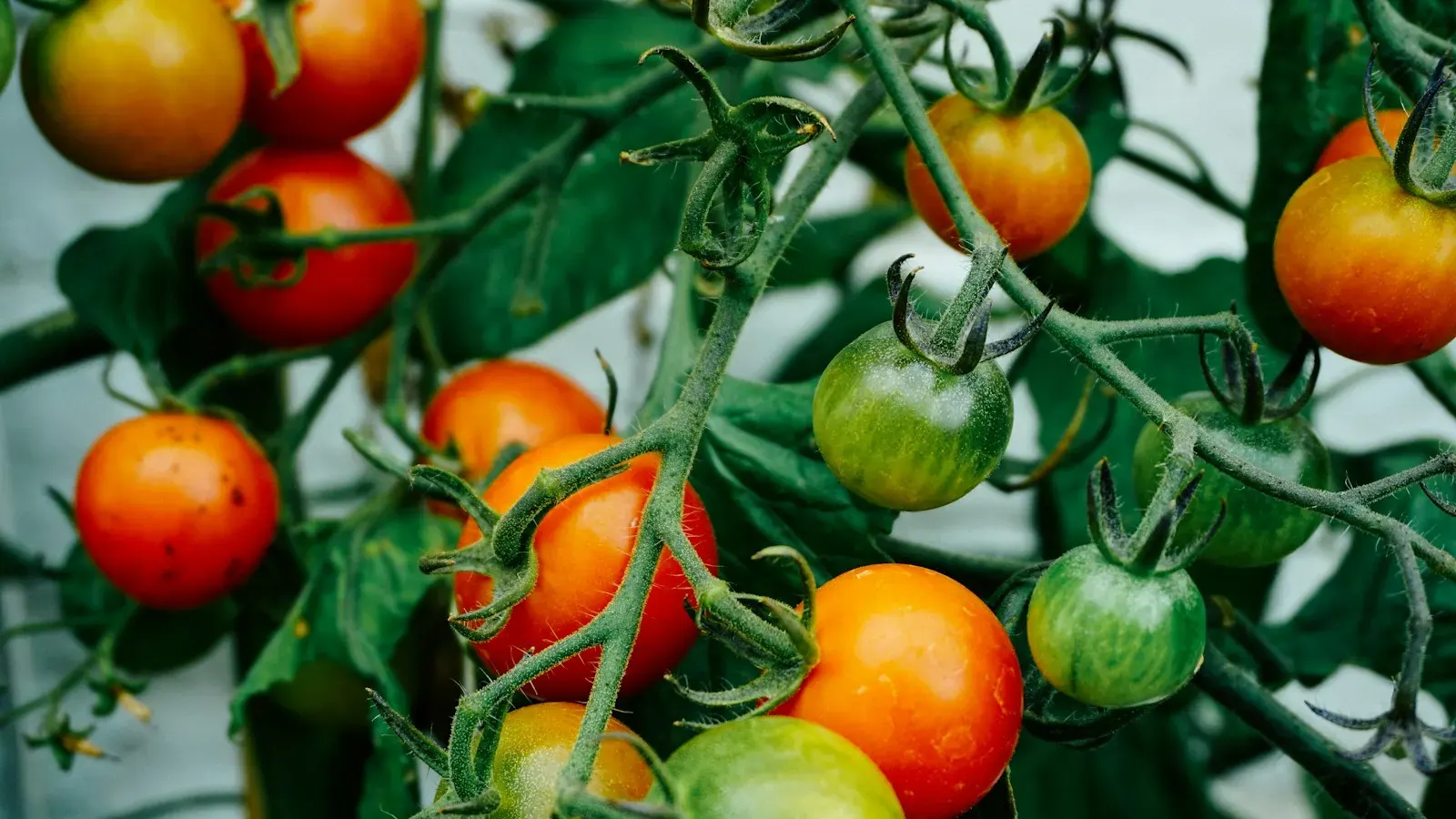
Almost every tomato problem that panics a first-year gardener comes down to inconsistent watering, not disease. Blossom end rot, cracked skins, and fruit that sits green forever are usually symptoms of how the plant is being watered and fed, which is good news. Those are fixable without spraying anything.
Here's how to tell what you're actually looking at, and what to do about it. Worth knowing up front: heirloom varieties are more prone to cracking than commercial hybrids, and that's a trait, not a failure on your part.
Black sunken spot on the bottom: blossom end rot
A dark, leathery, sunken patch on the blossom end (the bottom of the fruit, opposite the stem) is blossom end rot. It's not a fungus and it's not contagious. It's a calcium delivery problem inside the plant.
Here's the part that trips people up: it's usually not that your soil lacks calcium. It's that inconsistent watering, or too much nitrogen fertilizer, stops the plant from moving the calcium it has into the developing fruit. Dumping calcium supplements on the bed rarely fixes it. The first one I found, I was sure I'd killed the plant somehow. Turned out I'd just let the bed go dry for a few days the week before, then overcorrected with a heavy watering.
- Water deeply and consistently instead of letting the bed swing between bone dry and soaked
- Mulch to hold soil moisture steady between waterings
- Ease off high-nitrogen fertilizer, which pushes leafy growth at the expense of fruit
Oregon State University Extension has a deeper breakdown if you want the full mechanism. Affected fruit won't recover, but the next fruit on the same plant can be fine once watering evens out.
Mulch helps more than almost anything else you can do here. A consistent layer evens out soil moisture between waterings, which is the root cause behind blossom end rot, cracking, and a good share of fungal leaf issues too.
Cracked or split skin
Cracks (rings around the shoulders or splits running down the sides) happen when a tomato takes on water faster than its skin can stretch. Classic cause: a dry stretch followed by heavy rain or a heavy watering.
Same fix as blossom end rot, really: consistent moisture and mulch. Heirlooms crack more because they weren't bred for the thick shipping skin that commercial hybrids have. A split tomato is still fine to eat if you use it quickly. Just don't let it sit, since open cracks invite rot. University of Maryland Extension covers both problems together if you're seeing more than one at once.
Pale, papery patches on the sun-facing side: sunscald
A flat, pale yellow or white patch on whichever side of the fruit faces the most direct sun is sunscald, not disease and not a pest. It happens when fruit that's used to some shade suddenly gets exposed to full sun, most often right after aggressive pruning strips away too many leaves at once.
Prune gradually instead of all at once, and leave enough foliage to actually shade the fruit lower on the plant. Affected fruit is still fine to eat if you cut the papery patch away.
Puckered, misshapen fruit near the blossom end: catfacing
Fruit with deep scarring, puckering, or odd lobes near the blossom end is catfacing. It traces back to something that disrupted pollination, most commonly temperatures below about 50°F while the flower was forming, not anything that happened after the fruit set.
There's not much to fix after the fact, since the damage happened at flowering. It's more common on early-season fruit set during a cool snap, and later fruit on the same plant is usually normal.
Flowers falling off without setting fruit: blossom drop
Flowers that dry up and drop without ever becoming a tomato are usually a temperature problem, not a pollination failure you caused. Tomato flowers won't set fruit reliably below about 55°F at night or above roughly 90°F during the day, since the pollen itself gets damaged outside that range.
There's nothing to spray for this. Wait out the temperature swing, and flowers that form once conditions are back in range will set normally.
Fruit that won't ripen
Tomatoes stall out on ripening when it's too hot: above roughly 85-90°F, the pigments that turn fruit red don't develop properly. It looks like a plant problem but it's a weather problem.
- In a heat wave, just wait it out: ripening resumes when temperatures drop
- Late in the season, pick fruit that's started to blush and finish it indoors at room temperature
- Don't refrigerate ripening tomatoes; cold permanently kills the flavor and stalls ripening
A related issue, yellow or hard patches near the stem that never ripen even after the rest of the fruit turns red, is called yellow shoulders. Same root cause as stalled ripening: too much heat while the fruit was coloring. It's cosmetic, and the rest of the fruit is fine to eat.
Yellowing lower leaves
Some yellowing on the very lowest leaves late in the season is normal aging. Yellowing that climbs steadily up the plant, especially with dark spots, is more likely an early blight-type fungal issue, and that's about airflow — the same spacing habits that cut down on pests help here too.
Water at the base instead of overhead, space plants so air moves between them, and remove the lowest leaves touching soil. Most fungal problems on tomatoes start with soil splashing onto low leaves. Staking or caging your plants keeps foliage further off the ground too, cutting down on soil splash even more.
Frequently asked questions
- What causes blossom end rot on tomatoes?
- A calcium delivery problem inside the plant, usually driven by inconsistent watering or excess nitrogen fertilizer, not usually a calcium deficiency in the soil itself. It isn't a disease and doesn't spread between plants.
- Should I add calcium or crushed eggshells to fix blossom end rot?
- Usually not the fix. Most soil already has adequate calcium; the problem is that irregular watering prevents the plant from moving it into the fruit. Fix the watering consistency first.
- Can I eat tomatoes with blossom end rot or cracks?
- Yes: cut away the affected area on blossom end rot, and use cracked tomatoes quickly before rot sets into the split. Neither makes the rest of the fruit unsafe.
- Why are my tomatoes staying green?
- Usually heat. Above roughly 85-90°F, tomatoes stop developing the pigments that turn them red. Ripening picks back up when temperatures fall, or you can ripen blushing fruit indoors at room temperature.
- Why do heirloom tomatoes crack more than store-bought ones?
- Heirlooms weren't bred for the thick, shipping-durable skin commercial hybrids have. That thinner skin is part of why they're better to eat, and also why they split after uneven watering.
- What is catfacing on tomatoes?
- Puckered, scarred fruit near the blossom end, caused by cool temperatures, below about 50°F, disrupting pollination while the flower was forming. It's a flowering-stage issue, not something you can fix once the fruit has already set.
- Why did my tomato flowers fall off without producing fruit?
- Usually temperature. Tomato flowers need a night temperature above about 55°F and a day temperature below about 90°F to set fruit reliably. Outside that range, pollen is damaged and flowers drop instead of developing.