What Are Heirloom Vegetables? A Simple Guide for Beginners
Riley Hofmann
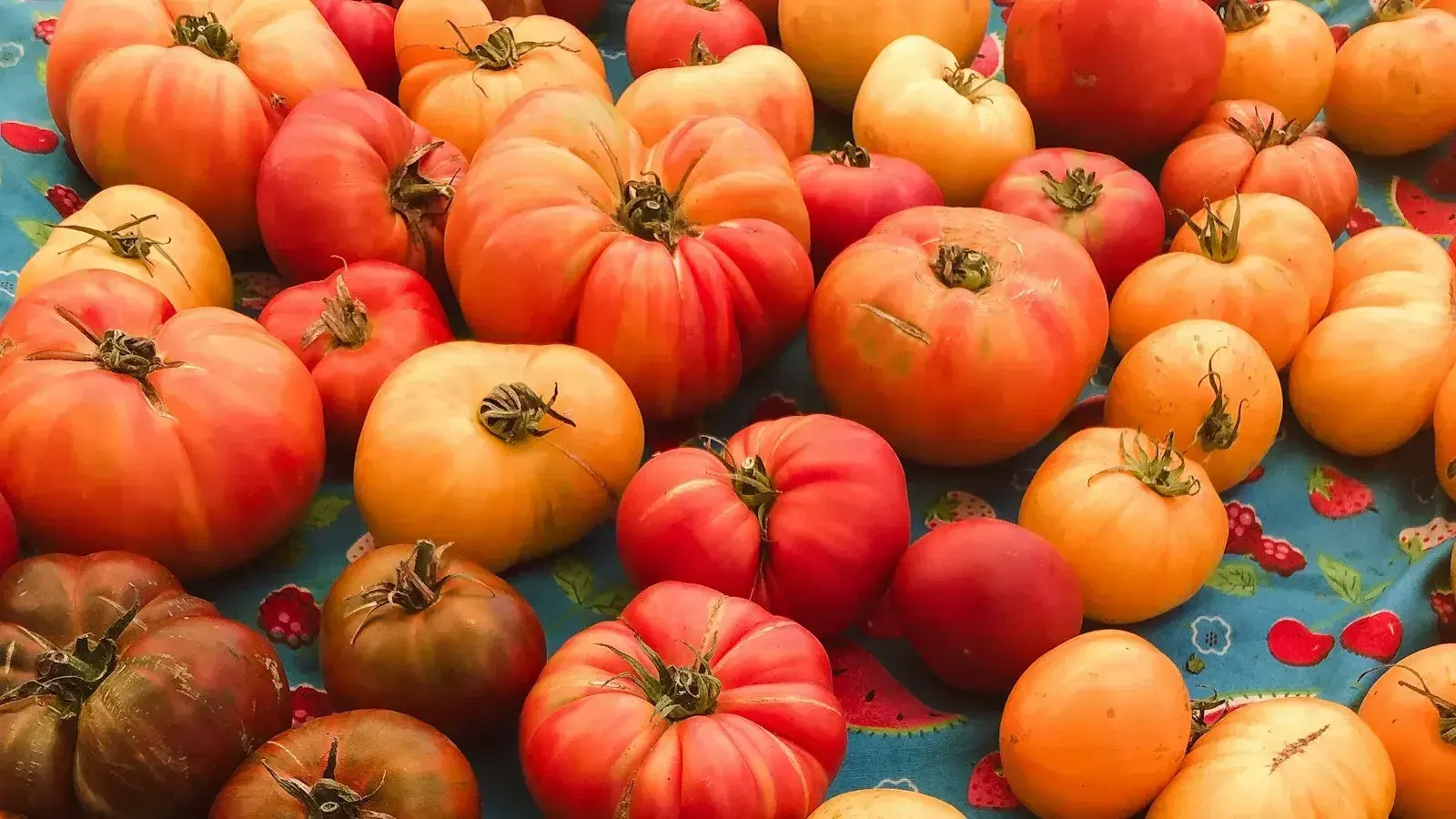
An heirloom vegetable is an open-pollinated variety that's been grown and passed down, seed to seed, for decades (the usual cutoff people use is 40+ years) without anyone breeding it for commercial traits like shelf life or shipping uniformly. Because it's open-pollinated, the seed breeds true: save seed from this year's tomato, and next year's plant is the same variety. That's the whole reason I got into these in the first place.
That one property, seed that breeds true, is what separates heirlooms from most of what's sold at a garden center, and it's why gardeners bother saving and passing them along. If you don't have a bed to grow any of these in yet, start with how to build a raised bed vegetable garden first.
Heirloom vs. hybrid vs. GMO
People throw these three words around like they mean the same thing. They don't:
- Heirloom: open-pollinated, seed breeds true, typically 40+ years old as a stable variety
- Hybrid (F1): deliberately cross-bred for one growing season's traits (disease resistance, uniform size, shelf life); seed saved from a hybrid won't breed true the next year
- GMO: genetically modified in a lab, a method not currently used in any home-garden vegetable seed on the consumer market
In practice, almost nothing you'll buy for a home garden is actually a GMO. That's a red herring for this conversation. The real choice you're making is heirloom versus hybrid. There's no legal definition of "heirloom" the way there is for "organic." Different sources draw the line differently, some use 40+ years, others use before 1945, when hybrid seed started dominating commercial agriculture. Either way, the property that actually matters, seed breeding true, is the same.
Why heirlooms are worth growing, and the real downsides
The upside is real. Heirlooms tend to taste better and come in way more variety than the handful of hybrids bred mostly for shipping uniformly, and because the seed breeds true, you save it once and never have to buy that variety again.
The downside's real too, and I'd rather just say it: a lot of heirlooms have weaker disease resistance than modern hybrids bred specifically to have it, and yields can be hit or miss. For a home garden bed, that's a trade I'm happy to make. It's a much rougher trade if you're trying to feed a family off one unreliable planting, which is a big part of why hybrids run commercial growing. Groups like Slow Food USA's Ark of Taste catalog heirloom and heritage varieties for exactly this reason: that genetic diversity just disappears once people stop planting it.
Heirloom tomatoes specifically split and crack more than hybrids too, since they weren't bred for thick, shipping-durable skin. If yours are doing that, here's what's actually going on and how to fix it.
How to save seed from heirlooms
Here's the basic process for most self-pollinating vegetables (tomatoes, beans, peas, lettuce):
- Let the fruit or seed head mature fully past the point you'd normally harvest to eat
- Remove the seeds and, for wet-seeded crops like tomatoes, ferment them in water for 2-3 days to strip the gel coating that inhibits germination
- Rinse and dry the seed completely on a paper towel or screen, out of direct sun
- Label and store in a paper envelope somewhere cool and dry
Crops that cross-pollinate easily (squash, corn, most brassicas) need real isolation distance from other varieties of the same species, or what you save won't grow true. If you're new to this, start with the self-pollinating crops and work up. University of Minnesota Extension has a solid breakdown of what's easiest to start with.
Test germination before you count on a batch: soak 10 seeds between damp paper towels for about a week and count how many sprout. Most vegetable seed stays viable 2 to 4 years in cool, dry storage, though onions and parsnips drop off faster, often within a year.
Good heirloom varieties for beginners
Start with two or three of these your first season rather than a full lineup. It's easier to learn what one variety actually needs than to troubleshoot five at once.
- Brandywine tomato: classic large slicing tomato, strong flavor, well documented for beginners
- Black Krim tomato: smaller, more forgiving than Brandywine, rich flavor
- Scarlet Nantes carrot: reliable, sweet, one of the more forgiving heirloom carrots
- Dragon Tongue bean: a bush bean, easy to grow and easy to see when ready to pick
- Detroit Dark Red beet: steady performer, good for both roots and greens
- Kentucky Wonder pole bean: a climbing variety and heavy producer, does well trained up a simple trellis
- Genovese basil: not a vegetable, but the classic heirloom planted alongside tomatoes as a companion
Where to buy true-to-type heirloom seed
Buy from a company that specializes in open-pollinated and heirloom seed instead of grabbing whatever's on a generic rack. They're more careful about maintaining the variety and labeling it right. Seed Savers Exchange is one of the biggest dedicated sources in the US and a solid place to start comparing varieties.
Common mistakes with saved seed
A few things ruin a season's worth of seed-saving effort:
- Not fermenting wet-seeded crops like tomatoes long enough, which leaves the germination-inhibiting gel coating intact
- Storing seed somewhere humid, like a garage or shed that swings with the weather, instead of somewhere cool and genuinely dry
- Saving seed from a cross-pollinated crop without isolation distance, then wondering why next year's plant doesn't match
- Skipping labels: seed all looks the same once it's dry and sitting in an envelope
Frequently asked questions
- Are heirloom seeds better than hybrid seeds?
- Better for flavor, variety, and saving your own seed, but worse, often, for disease resistance and consistent yields. Which one's "better" really depends on whether you care more about taste and seed-saving or reliable, uniform harvests.
- Does heirloom mean organic?
- No. Heirloom describes the variety's genetics and history, not how it was grown. An heirloom seed can be grown with or without synthetic fertilizer or pesticides. Organic is a separate certification about growing method.
- Can you save seed from any heirloom vegetable?
- Yes, because heirlooms are open-pollinated, but some are much easier to save correctly than others. Self-pollinating crops like tomatoes and beans are the easiest starting point; crops that cross-pollinate easily, like squash and corn, need isolation distance from other varieties to breed true.
- Why do heirloom tomatoes crack or split more than store-bought ones?
- Heirlooms generally weren't bred for the thick skin that commercial hybrids have for shipping durability. Their thinner skin is part of why they're more tender to eat, and also why they're more prone to cracking, especially after uneven watering.
- Are heirloom seeds more expensive?
- Sometimes slightly, per packet, than mass-market hybrid seed, but since heirloom seed breeds true, you can save your own after the first season and never buy that variety again, which offsets the difference over time.
- Do different heirloom varieties cross-pollinate in my garden?
- Only if they're the same species and the crop cross-pollinates easily, like squash or corn. Self-pollinating crops like tomatoes and beans rarely cross even planted close together, so isolation only matters if you're planning to save true seed from an easily-crossing crop.