Organic Pest Control That Actually Works in a Home Garden
Riley Hofmann
The most effective organic pest control is prevention and hand-picking, not spraying, including organic sprays. Healthy, well-spaced plants in rotated beds get hit less, and for most home-garden pests, walking out there and physically removing them beats anything in a bottle.
This follows the integrated pest management approach extension services teach: start with the least disruptive method, escalate only when you need to. Here's how that actually looks in a backyard bed.
Prevention does most of the work
- Choose disease-resistant varieties when they're available: it's free protection built into the seed
- Space plants properly so foliage dries out; damp, crowded leaves are where fungal problems start
- Rotate crops so the same plant family isn't in the same spot more than once every three or four years
- Clear out dead plant material at season's end, where pests overwinter
- Water at the base rather than overhead when you can, since wet foliage overnight favors both fungal problems and some pests
Michigan State University Extension has a good overview of how this fits into a full IPM approach.
Identify before you spray anything
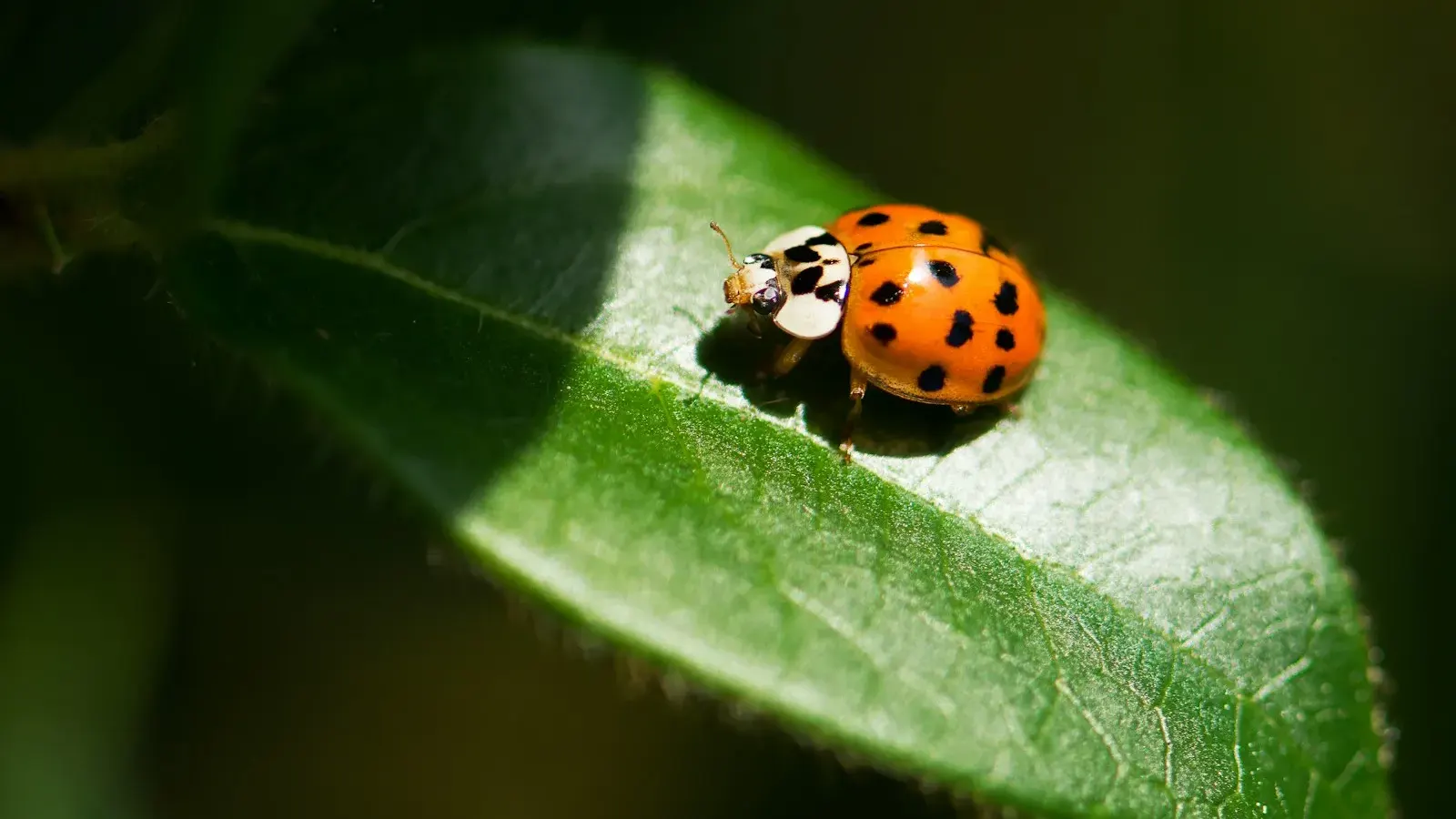
Most insects in your garden are neutral or actively helping you. Ladybugs, lacewings, ground beetles, and parasitic wasps all eat pests. Companion planting with flowers is the easiest way to keep them coming back. Spraying broadly kills those too, and then you've made next month worse.
Figure out what you're actually dealing with and whether the damage is bad enough to matter. A few chewed leaves on an otherwise healthy plant isn't worth intervening over. IPM calls this an action threshold: the point where damage is actually costing you yield, not just looking imperfect. A few holes in a lettuce leaf rarely crosses it.
Common pests, quickly identified
A few of the most common vegetable-garden pests, what to look for, and what actually works on each:
- Aphids: small, soft-bodied, clustered on new growth and leaf undersides. A strong water spray or insecticidal soap handles most infestations. Ladybugs and lacewings clean up the rest if you haven't sprayed them away
- Squash bugs: bronze-gray, lay copper-colored egg clusters on leaf undersides. Scrape off eggs before they hatch and hand-pick adults. They're tough enough that sprays rarely touch mature ones
- Cucumber beetles: yellow-green with stripes or spots, and worse than the chewing damage, they spread bacterial wilt. Row cover before flowering starts is the most reliable defense
- Cabbage worms and loopers: pale green, blend into brassica leaves, chew ragged holes. Bt (Bacillus thuringiensis), an organic-approved bacterial spray that only affects caterpillars, is the targeted option here
- Flea beetles: tiny, jump when disturbed, leave shotgun-hole damage on young seedlings. Too small and fast to hand-pick effectively, so row cover on transplants is the main defense
- Slugs and snails: ragged holes and slime trails, worse in damp mulch. Beer traps or hand-picking at night with a flashlight both work, since they're most active after dark
Hand-picking the big stuff
For large, visible pests (tomato hornworms, Colorado potato beetles, squash bugs), hand-picking is genuinely the most effective control available to a home gardener. Drop them in soapy water. Check undersides of leaves for egg clusters and crush those while you're at it. The first hornworm I ever went looking for, I stood over the plant for a full minute before I spotted it. They're colored to disappear against the stem, and your eye has to learn to catch them.
One caveat on hornworms: if you find one covered in what look like white rice grains, leave it. Those are parasitic wasp cocoons, and that wasp population is doing your pest control for free.
Hand-picking is also a task kids can genuinely help with, assuming they're old enough to tell a hornworm from their own finger and old enough that soapy water doesn't need explaining twice.
Japanese beetles are another good hand-picking candidate: metallic green-bronze, they cluster and skeletonize leaves in groups. Skip the pheromone traps sold for them. Research consistently shows they attract more beetles to the yard than they actually catch, often making the damage worse on nearby plants.
Physical barriers
- Floating row cover keeps flying pests off young plants entirely: remove it when flowering starts so pollinators can get in
- Collars around seedling stems stop cutworms
- A strong spray of water knocks aphid colonies off without any product at all
- Copper tape or a copper ring around vulnerable plants: slugs and snails avoid crossing it, since contact with copper gives them a mild electrical reaction
When to reach for soaps and oils
Insecticidal soap and horticultural oil work on soft-bodied pests like aphids, mites, and whiteflies. They work on contact only (no residual effect), so coverage matters and repeat applications are usually needed.
Apply in the early morning or evening, never on a hot sunny afternoon, or you'll scorch the leaves. And these still kill beneficial insects on contact, so spot-treat the affected plants instead of blanketing the whole bed. "Organic" doesn't mean harmless. SDSU Extension covers the tradeoffs of each organic method in more depth.
Bt works differently and is worth knowing about separately. It's a naturally occurring soil bacterium that caterpillars ingest and die from, but it doesn't harm bees, birds, or people, since it only affects caterpillar digestive systems. Spray it directly on the leaves caterpillars are actively eating for it to work.
Frequently asked questions
- What is the most effective organic pest control?
- Prevention and hand-picking. Resistant varieties, proper spacing, and crop rotation prevent most problems, and physically removing large pests like hornworms and potato beetles beats any spray for a home-sized garden.
- Are organic pesticides safe for beneficial insects?
- No. Insecticidal soaps and oils kill beneficial insects on contact just like pests. Spot-treat affected plants rather than spraying the whole bed, and avoid spraying flowers where pollinators are active.
- How do I get rid of aphids without chemicals?
- A strong spray of water knocks colonies off and often solves it. Beneficial insects like ladybugs and lacewings handle the rest if you haven't sprayed them out of existence.
- Should I kill tomato hornworms?
- Hand-pick them, yes, but if one is covered in small white rice-like projections, leave it alone. Those are parasitic wasp cocoons, and letting them hatch gives you free ongoing pest control.
- When should I use insecticidal soap?
- For soft-bodied pests like aphids, mites, and whiteflies, once prevention and physical removal haven't been enough. Apply in early morning or evening to avoid leaf burn, and expect to reapply since it only works on contact.
- What does neem oil do?
- It works as both a contact killer and a mild repellent for soft-bodied pests, similar to horticultural oil but with an added effect on insect feeding and reproduction. It breaks down faster in sunlight than synthetic pesticides, so it needs more frequent reapplication.
- Are pheromone traps worth using for pests like Japanese beetles?
- Generally not for protecting your own plants. They tend to draw in more beetles from the surrounding area than they actually trap, which can make damage worse nearby. Hand-picking directly off your plants is more effective.